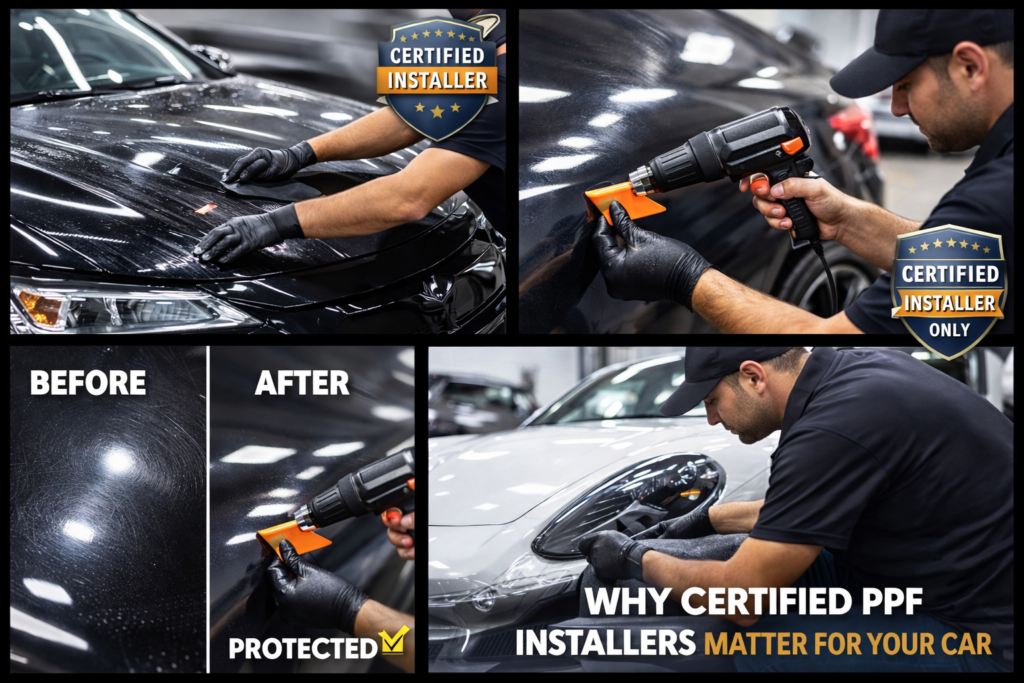
Paint Protection Film (PPF) is an essential investment for car owners who want to protect their vehicle’s paint from scratches, stone chips, UV rays, and environmental damage. However, the effectiveness of PPF depends heavily on who installs it. Certified installers ensure that your investment delivers maximum protection and long-lasting results.
Therefore, this FAQ guide explains why certified PPF installers are crucial for your car and how they enhance durability, appearance, and resale value.
What is a certified PPF installer?
To begin with, a certified PPF installer is a professional who has undergone training by recognized PPF brands and proven expertise in handling premium films.
In short, certification guarantees:
- Proper surface preparation
- Accurate installation techniques
- Use of advanced tools and templates
Consequently, you get a flawless, durable finish.
Why does certification matter for PPF installation?
Absolutely, certified installers follow strict guidelines and quality standards.
On the other hand, untrained installers often:
- Cause bubbles and wrinkles
- Leave edges exposed
- Reduce film lifespan
As a result, professional certification ensures maximum protection and longevity.
How do certified installers improve PPF durability?
Firstly, certified installers thoroughly clean and prep the paint surface.
Secondly, they ensure precise alignment and edge wrapping.
Moreover, they use correct squeegee pressure and slip solutions.
Hence, PPF adheres perfectly, resists peeling, and lasts longer even in harsh conditions.
Can certified installation prevent peeling and bubbles?
Generally, yes. Certified installers:
- Apply the correct techniques
- Work in dust-free environments
- Allow proper curing time
Therefore, the chances of bubbles, lifting, or edge failure are significantly reduced.
Does using a certified installer affect your car’s resale value?
Yes, significantly. Professional installation keeps your factory paint intact and allows the PPF to be removed cleanly if needed.
Furthermore, buyers trust cars that show evidence of certified protection.
Ultimately, this can increase resale value and appeal.
What risks do uncertified installers pose?
Without a doubt, uncertified installers may:
- Damage paint with improper cutting
- Use low-quality PPF
- Install incorrectly, causing premature wear
In comparison, certified installers minimize these risks effectively.
How does certification impact warranty?
Specifically, certified installers provide manufacturer-backed warranties.
Hence, if there is a defect in the film or installation, you can claim support.
Otherwise, DIY or uncertified installation often voids warranty coverage.
Does certified installation matter for expensive or luxury cars?
Absolutely. Luxury vehicles are more sensitive to scratches, UV damage, and environmental hazards.
Moreover, professional certified installation ensures flawless protection without compromising aesthetics.
How long does certified PPF installation last?
When done properly, certified PPF installation lasts 5–10 years depending on the brand.
In other words, certification ensures maximum film lifespan, self-healing performance, and durability.
Is hiring a certified PPF installer worth the extra cost?
Certainly. Although certified installers may charge more initially:
- You avoid premature replacement
- Minimize repair costs
- Enjoy peace of mind
In conclusion, the investment pays off with long-term protection and durability.
Final Verdict: Why Certified PPF Installers Matter
To sum up, certified PPF installers matter because they:
- Ensure proper surface preparation
- Guarantee accurate application
- Maximize durability and performance
- Maintain edge integrity
- Protect resale value
Overall, certified installation transforms PPF from a simple accessory into a long-term protection solution that keeps your
car looking brand-new.